







April 6, 2026


The Ultimate Sleep Position Guide for Canadians (2026)
What Does Your Sleep Position Say About the Mattress You Actually Need?
Your sleep position is one of the most important factors in choosing the right mattress. Whether you’re a dedicated side sleeper, a back sleeper, someone who flips to their stomach around 2am, or a full-on combination sleeper who cycles through all three — the support your body needs changes completely depending on how you sleep.This guide covers everything you need to know, broken down by sleep position: the pros and cons of each, what your body actually needs from a mattress for quality sleep, how body weight affects the equation, and which Endy mattress and firmness option is the right match for you.Here’s the short version:- Side sleepers need pressure relief at the hips and shoulders, plus enough support to keep the spine from dipping. A plush to medium-firm mattress is usually the sweet spot.
- Back sleepers need firm-enough support to prevent hip sinkage and a mattress that contours to the lumbar curve. Medium-firm is almost universally recommended.
- Stomach sleepers need a firm support core to keep the hips level and the lower back from arching. A firm to medium-firm mattress is essential.
- Combination sleepers need a responsive mattress that handles transitions between positions without resistance — medium-firm is the gold standard here.
- Body weight matters at every position — heavier sleepers compress mattress materials more deeply and generally need a firmer surface to maintain proper spinal alignment.
- Both the Endy Mattress and Endy Hybrid Mattress come in three firmness options (Plush, Medium-Firm, and Firm) and are designed to serve all sleep positions — proudly made in Canada, with a 365-night trial and a 15-year limited warranty.
Side Sleepers

What is Side Sleeping?
Side sleeping is the most popular sleep position and also one of the healthiest when you have the right mattress supporting you. Most side sleepers either stretch out relatively straight or curl into a variation of the fetal position, but both share the same fundamental challenge: concentrated pressure on the shoulder and hip that’s in contact with the mattress.Pros of Side Sleeping
Side sleeping comes with a real list of health benefits. It can reduce snoring and symptoms of sleep apnea by keeping the airway more open compared to back sleeping. It may help reduce acid reflux by allowing gravity to keep stomach content where it belongs. When properly supported, side sleeping promotes good spinal alignment and can help relieve or prevent back and neck pain. The fetal position, one of the most popular variants, is even associated with a sense of psychological comfort and security.Cons of Side Sleeping
Here’s the catch: side sleeping can be hard on your body if your mattress isn’t doing its job. The shoulder and hip bearing your weight need proper cushioning. Without it, you’re looking at pressure buildup, reduced circulation, and that classic wake-up-at-3am numbness in your arm or hip. A mattress that’s too firm pushes back against those contact points without conforming. Too soft, and your midsection sinks unevenly, pulling the spine out of alignment.Sleeping consistently on one side can also accelerate facial wrinkles on that side over time — a small but real consideration for some sleepers.4 Reasons Side Sleepers Wake Up in Pain
1. Your mattress is too soft or has started to sag. When a mattress is too soft — or has worn down over time — the heavier parts of your body sink past the lighter parts. Your spine curves downward and the lower back strains overnight.2. Your mattress isn’t contouring at the shoulder and hip. If your mattress is too firm and doesn’t yield at those contact points, pressure builds up and cuts off circulation. You’ll feel it as numbness or tingling that wakes you up in the night.3. You’re curled up too tightly in the fetal position. Curling too tight restricts blood flow to your limbs and puts strain on joints. Loosen it up and let your limbs relax naturally. You don’t need to change positions, just release some of the tension in your curl.4. Your pillow height is off. Sometimes it’s not the mattress at all — it’s the pillow. Side sleepers need a pillow thick enough to fill the gap between the shoulder and the head. Too flat and your neck drops; too thick and it cranes upward, all leading to neck pain.What Do Side Sleepers Need in a Mattress?
Pressure relief at the shoulders and hips. This is non-negotiable. Look for a responsive comfort layer that conforms to the natural curves of your body.Neutral spinal alignment. Your mattress needs to cushion without collapsing. The goal is a mattress that keeps every part of your spine in a straight, neutral line from head to tailbone.Comfort layer depth. Independent testing by sidesleeper.guide indicates that side sleepers benefit most from a comfort layer of 2–4 inches — deep enough to cushion the shoulders and hips, but not so thick that it creates uneven sinkage.Motion isolation. Side sleepers tend to move more during the night. If you share a bed, you’ll want a mattress that absorbs that movement so your partner sleeps through it.The Right Firmness for Side Sleepers
On a 1–10 firmness scale, most side sleepers do best in the 4–6 range (soft to medium-firm). According to the Sleep Foundation’s mattress firmness guide, the exact sweet spot depends significantly on body weight — heavier bodies compress mattress materials more deeply, so they need a firmer surface to maintain proper support. Lighter bodies don’t compress materials as deeply and tend to benefit from softer, more contouring options.In independent testing, sidesleeper.guide found that 78% of side sleepers preferred mattresses rated between 4–6 on the firmness scale.Back Sleepers

What Is Back Sleeping?
Back sleeping (also called supine position) is the second most common sleep position. You sleep with your face and chest upward, weight distributed along the length of your spine. When done right, it’s one of the most restorative positions there is. The challenge is having the right mattress to support the natural curves of your spine so nothing has to compensate overnight.Pros of Back Sleeping
Back sleeping naturally lends itself to spinal alignment. Without the weight of a turned body pressing on one side, the spine can rest in its natural position — which means less accumulated tension in the back muscles and ligaments. It also avoids face contact with the pillow, which can mean fewer skin creases and breakouts over time. Back sleeping may also help reduce acid reflux, since gravity keeps stomach content where it belongs.Cons of Back Sleeping
Back sleeping can worsen snoring and obstructive sleep apnea. When lying on your back, the tongue and soft tissues of the throat can partially block the airway more easily than in other positions. Some people also find they’re more prone to experiencing sleep paralysis while back sleeping — a temporary inability to move during sleep stage transitions that’s harmless but unsettling.For anyone with existing lower back pain, back sleeping on the wrong mattress can make things worse: a too-soft surface lets the hips sink, flattening the lumbar curve, while a too-firm surface doesn’t allow the natural arch of the lower back to be supported.4 Reasons Back Sleepers Wake Up in Pain
1. Your pillow loft is too high: If the loft is too high, it pushes your head forward toward your chest, leading to neck pain. A medium to low loft pillow is ideal.2. Your mattress is too soft. Back sleepers sometimes equate softness with comfort, but if your hips are sinking deeper than your shoulders, your spine is being pulled into a “hammock” shape that strains the lumbar all night.3. Your mattress is too firm. On the other hand, if your mattress is too firm, this creates pressure points that lead to an uncomfortable sleep.4. Your lumbar isn’t supported. Back sleepers need extra support under their hips and shoulders. If you don’t get the support you need at your lumber, it throws your spine out of alignment which places more pressure on your lower back.What Do Back Sleepers Need in a Mattress?
Lumbar support. The lower back has a natural inward curve. Your mattress needs to fill that space and support it — not let it collapse downward or push it unnaturally upward. This is especially important in the lumbar region, where most back pain originates.Medium-firm support. The general rule for back sleepers is medium-firm. This keeps the spine supported without letting the hips sink too deeply. A mattress that’s too soft allows the spine to curve unnaturally; too firm and it doesn’t contour to the lower back at all. According to the Sleep Foundation, zoned lumbar support is one of the most important features to look for in a mattress designed for back sleepers.Pressure relief without deep sinking. Unlike side sleepers, back sleepers don’t need extreme contouring at the shoulders and hips. What they need is gentle cushioning that distributes weight evenly and allows the mattress to adapt to the natural S-curve of the spine — without the deep, slow-sink feeling of traditional memory foam that can pull the lumbar out of neutral.The Right Firmness for Back Sleepers
Most back sleepers land best in the 5–7 range on a 1–10 scale. Body weight determines where exactly:Stomach Sleepers

What Is Stomach Sleeping?
Stomach sleeping is the least common sleep position and the one that puts the most mechanical stress on the spine. When you lie face-down, the heaviest part of your body (your hips and midsection) pushes into the mattress. On the wrong surface, this creates a downward arch in the lower back that strains the lumbar region all night. According to the Mayo Clinic, stomach sleeping can put strain on both the spine and neck — especially when the mattress isn’t doing its job.Pros of Stomach Sleeping
Stomach sleeping can reduce snoring in some people, since the face-down position helps keep the upper airway open and reduces the soft tissue obstruction that causes snoring in back sleepers. Some stomach sleepers also report that the position feels natural, grounding, and comfortable — the gentle pressure on the abdomen can feel soothing, and some people find it easier to fall asleep in this position than any other.Cons of Stomach Sleeping
The list of cons is longer. The downward arch in the lower back created by stomach sleeping on a soft surface is the primary concern — it’s the reason many stomach sleepers wake up with stiffness and lower back pain. When your hips sink into the mattress, your lower back is pulled into an exaggerated arch (hyperextension) that puts continuous strain on the lumbar muscles and spinal discs overnight. Stomach sleeping also forces the neck to turn sharply to one side for breathing, which can lead to chronic neck pain, shoulder tension, facial wrinkles and muscle imbalances over time — especially if you always turn your head the same direction. Extended stomach sleeping can also put pressure on internal organs and on the diaphragm, making breathing slightly less efficient than other positions. For pregnant sleepers, stomach sleeping becomes impractical and uncomfortable in the second trimester and beyond.3 Reasons Stomach Sleepers Wake Up in Pain
1. Your pillow is too high. A thick pillow forces your neck to bend upward, adding stress to your spine which can lead to neck pain. Stomach sleepers need as thin a pillow as possible (3 inches or less) or no pillow at all to keep your head and neck in a neutral position.2. Your mattress is too soft. If your mattress is too soft, your hips will sink into the mattress and throw your spine out of alignment, leading to lower back pain.3. Your spine is out of alignment. Sleeping on your stomach means your head is turned to one side for hours at a time, which can lead to stiffness when you wake up.What Do Stomach Sleepers Need in a Mattress?
A firm support core. This is the most important thing. Stomach sleepers need a mattress that resists midsection sinkage and keeps the hips level with the rest of the body. When the hips sink, the spine arches downward — and that’s where the pain comes from. A mattress with a high-density or coil-based support core prevents this.Even surface support. Stomach sleepers don’t need the deep contouring that side sleepers rely on. In fact, too much contouring works against them. What they need is a flat, stable, even surface that keeps the body in a neutral position without creating any “cradle” effect.Edge support. Many stomach sleepers naturally gravitate toward the edges of the bed, spreading out to get comfortable. Solid edge support means you can use the full surface of the mattress — right to the sides — without feeling like you’ll roll off or noticing the edges sag over time.Temperature regulation. Sleeping face-down means your face is close to the mattress surface. A breathable, cooling mattress cover and open-cell foam structure help keep the sleep environment fresh and comfortable.The Right Firmness for Stomach Sleepers
Stomach sleepers need to go firmer than any other sleep position. The Sleep Foundation recommends a firmness of 6–8 out of 10 for most stomach sleepers.Hybrid vs. Foam for Stomach Sleepers
Hybrid mattresses are generally the better choice for stomach sleepers. The coil support system provides more responsive pushback that actively prevents the hips from sinking. Individually wrapped pocket coils adapt to your body shape while maintaining a firm, level surface — and the coil layer also creates airflow that keeps you cooler face-down.All-foam mattresses can work for stomach sleepers, particularly lighter ones (under 130 lbs). The main thing to watch: some foam mattresses have too much of a contouring effect, which is the opposite of what stomach sleepers need. If you go foam, look for high-density support layers and a firm rating.Combination Sleepers

What Is a Combination Sleeper?
If you wake up in a different position than you fell asleep in, you’re a combination sleeper — and you’re in the majority. Shifting positions through the night is great for circulation and prevents the sustained pressure on one body part, but it also puts unique demands on your mattress.Pros of Combination Sleeping
Moving throughout the night is actually good for you. It relieves pressure on any single point of the body, improves circulation, and prevents the kind of localized stiffness that dedicated position sleepers often experience. Combination sleeping also tends to be self-correcting — if one position starts to feel uncomfortable during the night, you naturally shift.Cons of Combination Sleeping
The challenge is finding a mattress that supports all your positions without compromise. A slow-recovering foam mattress creates resistance every time you change positions — you can actually feel yourself fighting the mattress to get comfortable in a new position. Poor motion isolation becomes more of an issue for partners because there’s more movement to absorb. And if your mattress is dialled in perfectly for your primary position but not the others, you’ll still wake up uncomfortable.What Do Combination Sleepers Need in a Mattress?
Responsive support. Your mattress needs to recover quickly when you change positions. A fast-responding foam or a coil-based system means you’re never fighting the surface to get settled. This is the single most important feature for combination sleepers.Balanced firmness. Too soft and you’ll sink out of alignment on your back and stomach. Too firm and side sleeping becomes painful on your hips and shoulders. The sweet spot is a medium-firm mattress that can do a bit of everything.Multi-zone pressure relief. Your pressure points shift completely depending on whether you’re on your side (shoulders and hips), your back (lumbar and lower back), or your stomach (hips and midsection). You need a mattress that handles all three zones.Motion isolation (especially for couples). More movement means more potential for disturbance. Look for a mattress that absorbs and contains movement rather than transferring it across the surface.The Right Firmness for Combination Sleepers
Medium-firm is the gold standard. The Sleep Foundation identifies this range (around 6–7/10) as the most versatile feel for people who move around at night — firm enough to support back and stomach positions, cushioned enough to relieve pressure during side sleeping.If you’re a combination sleeper who spends more time in one position than others, use that as your anchor:Foam vs. Hybrid for Combination Sleepers
All-foam mattresses excel at pressure relief and motion isolation. When one partner shifts, the other barely notices. The biggest con against memory foam is that traditional closed-cell memory foam traps body heat because of its dense structure. The Endy Mattress solves this with 100% open-cell foam infused with cooling gel so airflow stays active throughout the night. The one trade-off versus a hybrid is that even open-cell foam recovers slightly more slowly than coils, meaning position changes require a touch more effort. But Endy’s gel-infused foam bounces back faster than traditional memory foam, making it a responsive all-foam option.Hybrid mattresses are a combination sleeper’s best friend. The coil system bounces back almost instantly when you change positions — there’s no resistance or fighting the mattress. The Endy Hybrid’s individually wrapped pocket coils respond independently to pressure, which means you get zoned support (firmer under the lumbar, softer under the shoulders and hips) plus superior responsiveness. The coil layer also creates natural airflow through the mattress core, which matters when you’re moving around and generating more body heat. According to Healthline, open-cell foam structure, cooling gel infusion, and coil airflow are the top temperature management features.Weight and Firmness: The Factor Most People Overlook
Body weight is one of the most important — and most overlooked — variables in mattress selection. The firmness rating on a mattress tag describes how the mattress feels under a standard pressure, but your body weight determines how deeply you actually compress those materials. Two people lying on the same medium-firm mattress can have completely different experiences.Here’s the simple rule: heavier bodies compress mattress materials more deeply, so they need a firmer surface to maintain proper support. Lighter bodies don’t compress materials as deeply and benefit from softer, more contouring options.One important note: if two people of significantly different weights share the same mattress, this can create a compromise situation. The Hybrid’s zoned support — where each coil responds independently to pressure — helps accommodate different body weights on the same sleep surface more effectively than all-foam options. Each partner essentially gets a slightly customized feel based on how deeply they compress the coil layer.It’s also worth noting that body weight affects long-term mattress durability, not just the feel. Heavier sleepers compress the comfort layers more deeply with every sleep cycle, which accelerates wear over time. The high-density support foam in both Endy mattresses is engineered to resist this — maintaining its structure and firmness for years. The Endy Hybrid’s steel coil system adds another layer of structural resilience, making it the more durable long-term choice for heavier sleepers. Both mattresses are backed by a 15-year limited warranty, which reflects the confidence Endy has in how these materials hold up over time.Why the Endy Mattress and Endy Hybrid Work for Every Sleep Style

The Endy Mattress (Foam) — Best For: Most Side, Back, and Combination Sleepers
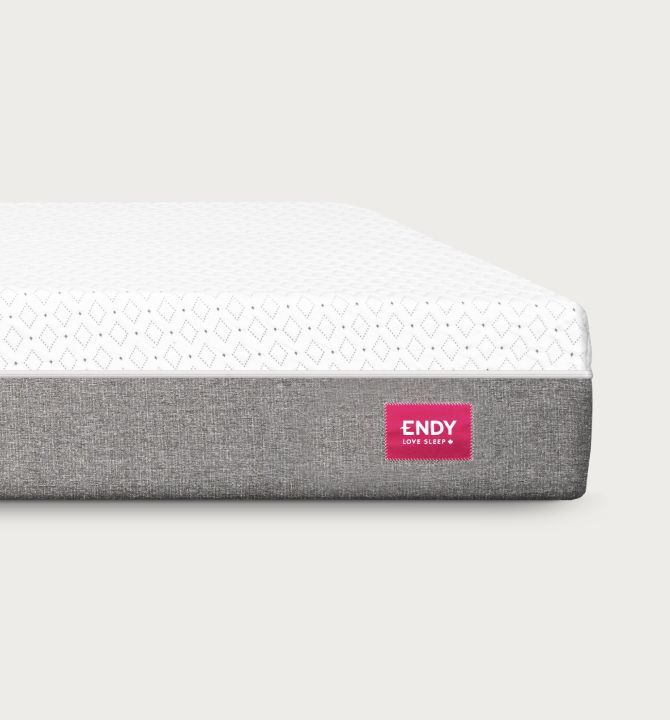
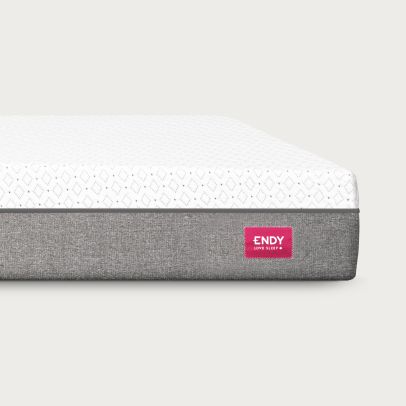
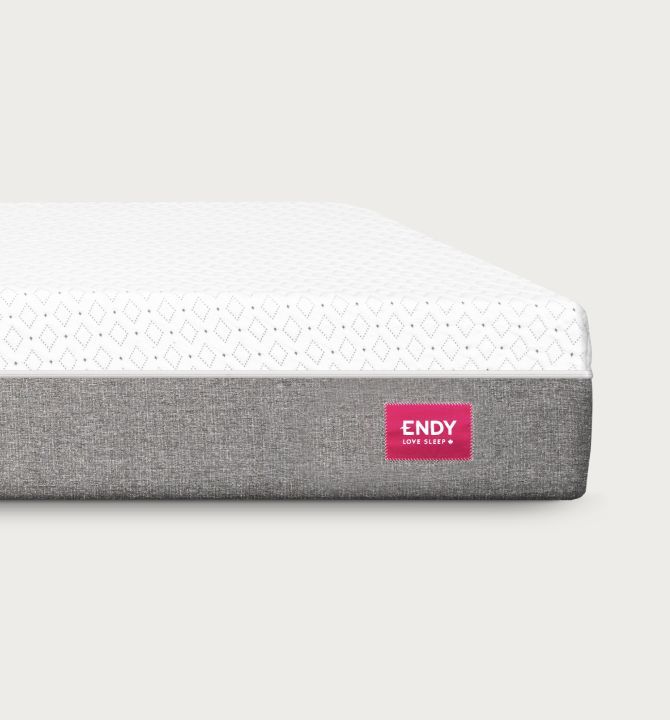
The Endy Mattress is a 100% foam mattress built around three core layers that work together to deliver both pressure relief and spinal support.Endy Cooling Comfort Foam (comfort layer) is the top layer — a responsive foam that cradles and supports your body to promote deep sleep. It gently contours to your shape to reduce pressure on joints and muscles so you fall asleep faster and stay comfortable longer.Most importantly, it’s 100% open-cell foam — meaning it’s breathable for superior airflow that prevents heat buildup. Cooling gel is infused throughout, creating a heat-dissipation effect that keeps the surface cool to the touch and helps you maintain a comfortable temperature all night. It also recovers more quickly than traditional memory foam, which matters for combination sleepers.Pressure-Relief Foam (transition layer) sits in the middle and does two important jobs. It adds comfort and promotes pressure relief as you sleep, reducing tossing and turning so you sleep more soundly. It also eliminates motion transfer so you won’t feel any disturbance when the person next to you moves or gets out of bed. This layer is temperature-neutral, meaning it won’t go soft in the summer or become too firm in the winter.High-Density Support Foam (base layer) is the foundation. This layer guarantees perfect firmness and support for years to come. It also prevents the layers above from sinking too deeply — keeping heavier areas like the hips from dropping past the point of proper spinal alignment. This is what makes the mattress critical for back and stomach sleepers.The micro-quilted cover is machine-washable and removable — stretchy and breathable, designed to move with your body while promoting airflow for cooler sleep. The whole mattress is CertiPUR-US® certified, hypoallergenic, and latex-free.Firmness options for the Endy Mattress:- Plush (11"): Deeper cushioning and a cloud-like feel that cradles curves and relieves pressure. Best for side sleepers, lighter individuals, and anyone who prefers a softer, more enveloping mattress.
- Medium-Firm (10"): Balanced support meets gentle contouring — ideal for sleepers who want pressure relief without sinking. The most universally comfortable feel, great for couples and combination sleepers.
- Firm (9"): A sturdier, more supportive feel that keeps the spine aligned and prevents sinking. Best for back and stomach sleepers, or those who prefer a stable, lifted sleep surface.
- Side sleepers (Plush or Medium-Firm depending on body weight)
- Back sleepers in the 130–230 lb range (Medium-Firm)
- Combination sleepers who prioritize motion isolation (Medium-Firm)
- Couples who need zero motion transfer
- Hot sleepers who want a cooling foam solution
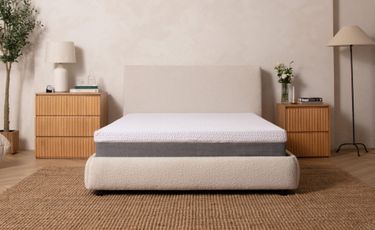
A 100% foam mattress built around three core layers that work together to deliver both pressure relief and spinal support, giving perfect comfort for any sleep position.Shop the Endy Mattress
The Endy Hybrid Mattress — Best For: Back Sleepers, Heavier Sleepers, Hot Sleepers, and Anyone Who Wants Maximum Responsiveness
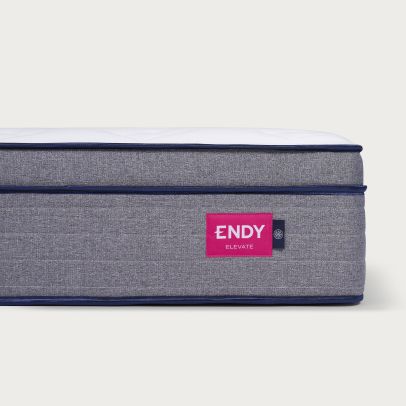
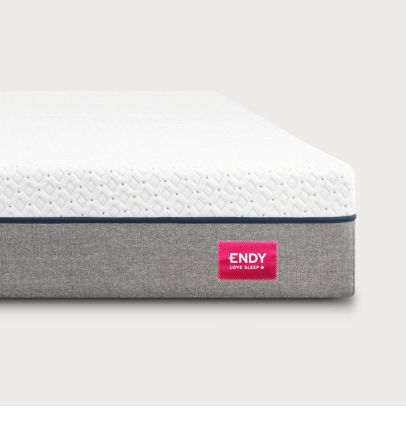
The Endy Hybrid takes everything in the foam mattress and adds a 7" zoned pocket coil system underneath the comfort layers. The result is a more responsive, more breathable, and more structurally reinforced sleep surface.The quilted cover is lined with Endy Foam — ultra-comfortable and soft to the touch, with cooling gel infusion that pulls heat away from your body for a cooler feel from the moment you lie down.Endy Cooling Comfort Foam delivers the same responsive pressure relief as the foam mattress — cradling and supporting the body, releasing tension from shoulders, hips, and back, with open-cell foam and cooling gel keeping the temperature in check.Pressure-Relief Foam eases pressure points and eliminates motion transfer, the same as in the foam mattress, complemented and reinforced by the coil system below.Zoned Coil Support is where the Hybrid sets itself apart. The 7" individually wrapped high-carbon steel pocket coils are quiet and durable — and they’re zoned, meaning they’re firmer in the center third of the mattress (under the lower back and hips) and softer under the shoulders and hips.This delivers ergonomic lumbar support and superior motion isolation. Each coil responds independently to pressure, so two people with different body weights can share the same mattress and each get what they need. The coil system also creates natural airflow channels through the mattress core, making the Hybrid significantly cooler than all-foam options.Edge support means the entire sleep surface stays stable and usable right to the perimeter. You can sit or sleep near the edge without feeling like you’ll roll off — and it makes getting in and out of bed easier, too.High-Density Support Foam at the base keeps the mattress perfectly firm and supportive for years, with the same Canadian-made durability as the foam mattress.Firmness options for the Endy Hybrid:- Plush (13"): Exceptional support with a cloud-like feel — the deepest comfort layer in the Endy lineup. Ideal for side sleepers who want premium pressure relief and don’t want to compromise on cushioning.
- Medium-Firm (12"): The perfect balance of lumbar support and cushioned responsiveness. Ideal for all sleep styles, especially combination sleepers and couples.
- Firm (11"): Firmer support for optimal alignment — ideal for back and stomach sleepers, particularly those over 130 lbs.
- Back sleepers who want targeted lumbar support (Medium-Firm or Firm)
- Stomach sleepers (Firm for most; Medium-Firm for lighter sleepers)
- Sleepers over 230 lbs across all positions
- Hot sleepers who want maximum airflow
- Couples who want edge-to-edge usable surface and strong motion isolation
- Combination sleepers who want maximum responsiveness between positions
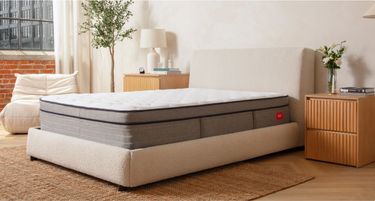
Everything you love about the foam mattress plus a 7" zoned pocket coil system underneath for a more responsive, breathable, and structurally reinforced sleep surface.
Shop the Endy Hybrid Mattress
The Canadian Advantage: Why Endy’s Materials Work Across All Four Seasons
Here’s something that doesn’t come up enough when talking about mattresses: traditional foam mattresses that stiffen in cold Canadian environments or soften in Canadian summers create a noticeably different sleep experience from season to season. Endy’s temperature-neutral foam is engineered to resist both — maintaining consistent firmness whether it’s a polar vortex in January or a humid July evening. No stiffer-in-winter, softer-in-summer fluctuations.The Endy Hybrid’s coil system is naturally temperature-neutral in a different way — metal doesn’t change firmness with temperature the way foam can. Combined with the enhanced airflow through the coil layer, the Hybrid maintains consistent feel and breathability across every Canadian season.The Endy 365 Night Trial and 15 Year Warranty
Every Endy mattress purchased on or after November 15, 2025 comes with a 365-night sleep trial — a full year to decide if the mattress is right for you. This is especially important for combination sleepers and those switching from a very different mattress, since bodies take time to adjust to a new sleep surface.Endy offers a 15 year warranty: if you experience a manufacturing defect, Endy will replace the mattress at no cost — including pickup of the original and delivery of the replacement. All Endy mattresses are CertiPUR-US® certified, meaning the foam is tested for content, emissions, and durability by independent accredited laboratories.Free shipping is available to all 10 Canadian provinces. In-stock orders ship in just 1 day.Frequently Asked Questions

