New Data, 2026: 53% of Canadians Are Losing Sleep to Overheating
By Adelaide Prior
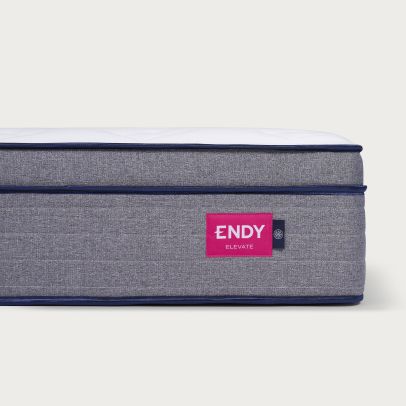
More than half of Canadians (53%) wake up too warm at least once a week, according to a national study Endy commissioned with research firm Leger in August 2026. That’s over 20 million people whose sleep gets interrupted by heat on a near-weekly basis, and for almost a third of Canadians, it’s happening several times a week or more. The same study found that many of us don’t understand why body temperature matters for sleep in the first place. If heat is keeping you up, the fix starts with your mattress: the Endy Elevate Hybrid mattress is engineered with breathable, open-cell foam and airflow-friendly coils specifically to help you sleep cooler and wake up with less pain.
How Many Canadians Are Actually Losing Sleep to Heat?
Waking up too warm isn’t a fringe complaint. It’s one of the most common sleep disruptors in Canada.In our survey of 1,527 Canadians, 53% said they wake up because they feel too warm at least once a week. Nearly one in eight (12%) said it happens every single night.Almost a third of Canadians wake up hot several times a week or more. For that group, overheating is a pattern that chips away at their sleep quality week after week.
Is Overheating Just a Summer Problem?
Summer is when most people notice they’re overheating. Among Canadians who ever wake up too warm, 69% say it happens in the summer months.But heat-related sleep disruption isn’t confined to July and August. About one in four Canadians (24%) say they deal with it year-round, and that number climbs significantly among women and Canadians 55 and older.For year-round hot sleepers, nearly seven in ten wake up too warm several times a week or more, and 29% wake up hot every single night. If your mattress runs hot in January as well as July, that’s a sign the mattress itself, not the weather, could be the problem.
Why Does Body Temperature Even Matter for Falling Asleep?
45% of Canadians don’t know that core body temperature actually needs to drop for good sleep to happen.That’s not just a trivia gap. Your circadian rhythm, the internal clock that governs your sleep-wake cycle, naturally cools your body as bedtime approaches. Blood vessels in the hands and feet dilate to release heat, a process closely tied to melatonin release that helps you fall asleep faster and move into deep sleep. If your mattress is trapping heat and fighting that natural cool-down, you can spend eight hours in bed and still wake up feeling like you barely rested.A mattress that sleeps hot works against your body’s own biology every single night, disrupting healthy sleep cycles and, over time, hurts restorative sleep, mood, and next-day cognitive function.
What’s the Ideal Bedroom Temperature for Sleep?
Sleep science generally points to a bedroom temperature of about 15°C to 19°C (60°F to 67°F) as the sweet spot for quality sleep, since it supports your body’s natural heat-dissipation process.Ambient temperature is only one piece of the puzzle, though. Light exposure, breathable fabrics, and a consistent sleep schedule all play a role in a healthy sleep environment. However, a mattress that traps heat can undo all of that other work, keeping your body warmer than your bedroom thermostat suggests, no matter how well you’ve dialed in the rest of the room.
Do All Foam Mattresses Sleep the Same?
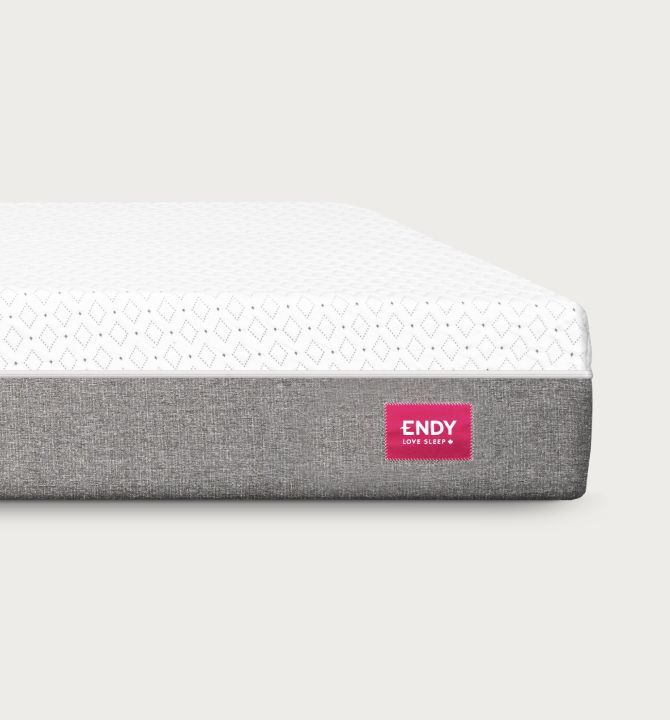
Nearly a third of Canadians (30%) believe all foam mattresses retain about the same amount of heat. Another 39% are unsure. That leaves a lot of people shopping for a mattress with little understanding of how the materials actually perform.What you need to understand is that “foam” is a category, and how it’s engineered determines whether it sleeps hot or cool. Dense, closed-cell memory foam is notorious for trapping body heat. Open-cell foam is built differently, with a structure that allows air to move through it, so heat doesn’t get stuck against your skin.This is why Endy uses breathable, open-cell foam infused with cooling gel in every mattress and mattress layer we build. As a company that is founded in Canada, we engineered our mattresses to respond to the unique climate conditions we sleep through every single night.
Is Heat the Reason People Regret Their Mattress?
When Canadians who bought a mattress in the past five years were asked what they regret about it, sleeping too warm ranked right alongside sagging and improper firmness as a top complaint.That puts overheating in the same category as the two issues most of us think of first when a mattress purchase goes wrong. Heat retention deserves the same weight in your buying decision as durability and firmness do, and it’s often overlooked until it’s too late to return the mattress.
What About Back Pain — Is That Part of the Story Too?
Heat isn’t the only thing standing between Canadians and a good night’s sleep. In the same study, 44% of Canadians (representing more than 18 million people) said back pain has disrupted their sleep at least weekly over the past year. Disruption was significantly higher among Canadians aged 35 to 54, Albertans, and households with kids.Heat and pain often show up together, and it makes sense: a mattress that’s sagging, too soft, or trapping heat is also more likely to leave you tossing, turning, and out of alignment. Solving for one usually means solving for the other, which is why mattress construction matters more than marketing claims.
How Is the Endy Elevate Hybrid Built to Solve Both?
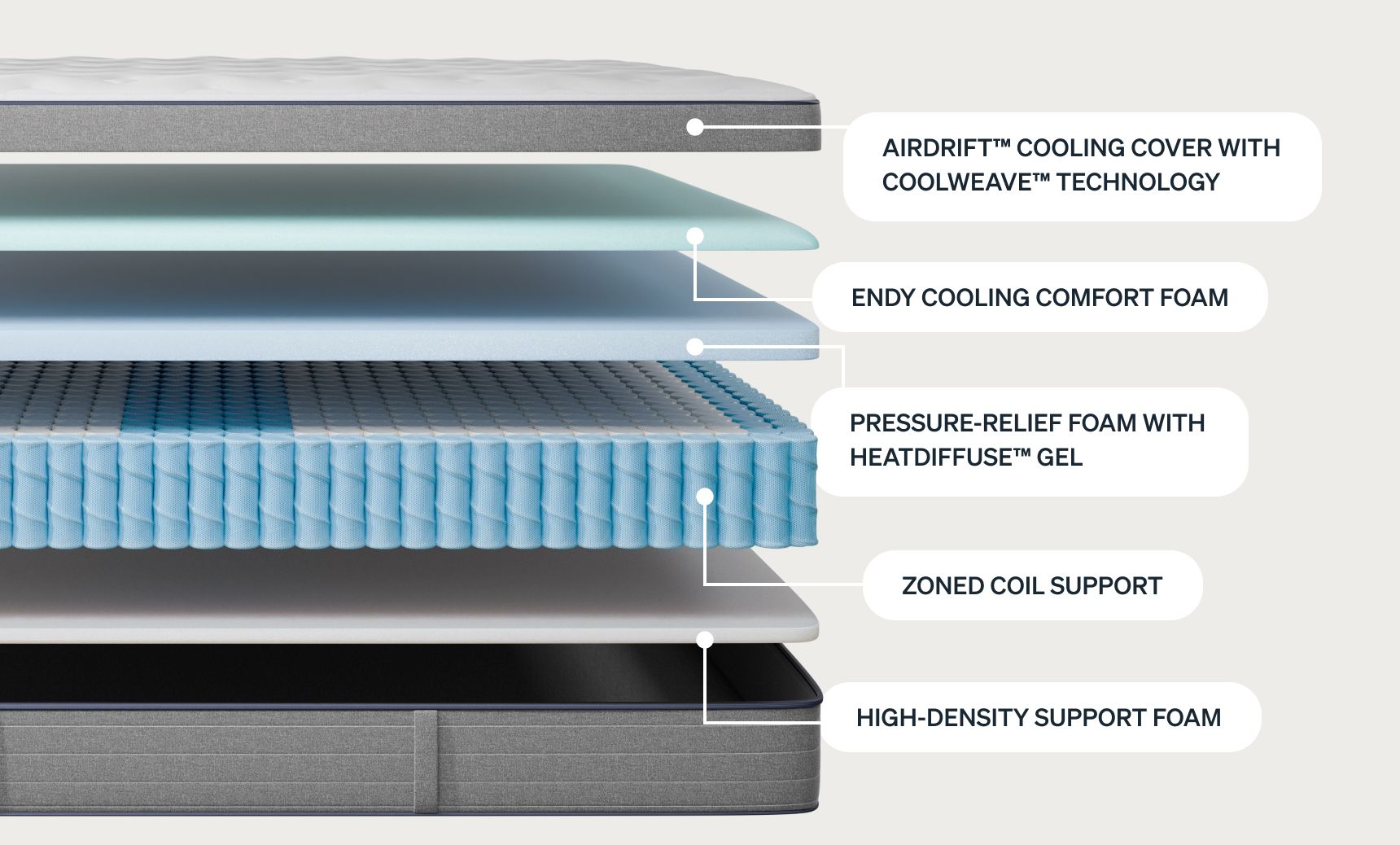
We designed the Endy Elevate Hybrid with this data in mind: Canadians want a mattress that sleeps cool and supports a healthy spine, night after night, all year long.Every layer is built with a purpose:
The AirDrift™ Cooling Cover with CoolWeave™ Technology pulls heat away from your body from the moment you lie down, so you get a cooler feel right away.
Breathable, open-cell comfort foam keeps air moving through the mattress instead of trapping it, addressing the heat-retention issue nearly a third of Canadians don’t realize varies by mattress.
Pressure-relief foam with HeatDiffuse™ Gel and zero motion transfer eases tension in the back, hips, and shoulders while absorbing movement, so you and your partner both sleep cool and undisturbed.
7” individually wrapped, high-carbon steel pocket coils deliver targeted lumbar support that keeps your spine aligned, while the space between coils allows for continuous airflow.
Reinforced edge support keeps the full sleep surface usable and stable, so heat and pressure don’t just get pushed to the middle of the bed.
Every Endy mattress is CertiPUR-US® certified and proudly made in Canada, and the Endy Hybrid is backed by a 365-night trial and a 15-year limited warranty, so you have a full year of Canadian seasons to feel the difference for yourself.Sleeping hot isn’t something you have to accept, and neither is waking up sore. If the data above sounds familiar, it might be time to find a mattress that works with you. Explore the Endy Hybrid and get one full year to discover cooler, more supportive sleep, risk-free.